
Diesel Truck and Trailer Repair Starts With the Right Diagnosis
For diesel truck and trailer repair, get the truck to a safe location, note the warning lights and symptoms, and request a technician who can diagnose the fault before parts are replaced. Tell dispatch whether the problem involves the engine, brakes, tires, or trailer so the right help arrives.
Rapid Truck Repair provides 24/7 mobile heavy-duty diagnostics, engine, brake, and tire service across the West Coast. Its ASE-certified technicians offer a 45-minute response to help fleets limit downtime.
I’m Sagar Bhardwaj, a lead diesel technician with fleet repair experience since 2015 and a truck repair business owner since 2024. I’ll use that experience to help you make practical diesel truck and trailer repair decisions.
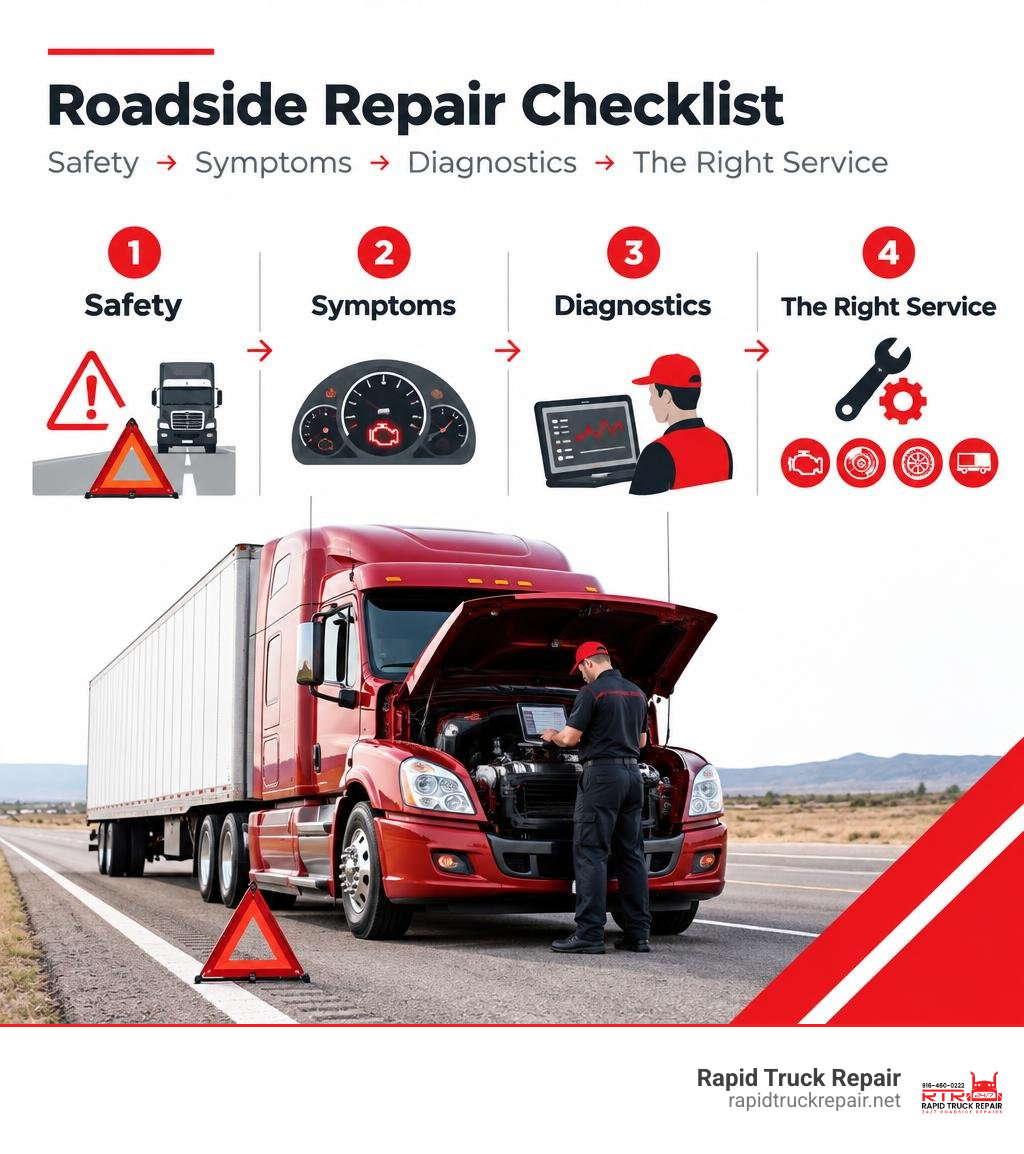
Every fleet manager knows that an unscheduled roadside breakdown hits your bottom line hard. In 2026, the average cost of an unplanned Class 8 breakdown ranges between $1,000 and $2,500 per day. That figure doesn’t even account for secondary towing bills, lost freight revenue, customer penalties, or ruined delivery windows. When equipment stops rolling, profitability evaporates.
Understanding the mechanics of commercial vehicles, recognizing warning signs early, and partnering with an integrated mobile repair team is the best strategy to keep your drivers rolling and your operating margins intact.
Comprehensive Diesel Truck and Trailer Repair: Engine, Drivetrain, and Emissions

Heavy-duty commercial tractors and workhorse diesel pickups operate under extreme mechanical stress. Whether your fleet runs long-haul Class 8 tractors powered by heavy-duty Cummins platforms or medium-duty support rigs equipped with Power Stroke and Duramax platforms, complex powertrains require precise troubleshooting rather than guesswork.
Common Diesel Engine and Drivetrain Failures
Nearly 40% of all heavy-duty commercial vehicle breakdowns stem directly from engine, fuel system, or drivetrain failures. These systems endure continuous thermal cycles, heavy torque loads, and high vibration levels.
A smooth-running diesel depends on high-pressure fuel delivery. Modern common-rail systems operate at pressures exceeding 30,000 psi. When fuel injectors wear out, stick open, or develop internal leaks, you will experience unburnt fuel, heavy black smoke, severe power loss, and rapid fuel dilution in your crankcase oil.
Turbocharger assemblies are another frequent failure point. A stuck variable geometry turbocharger (VGT) nozzle or a blown oil seal will rob your engine of boost, spike exhaust gas temperatures, and trigger aggressive electronic engine de-rates.
Further down the driveline, high-pressure oil pumps (HPOPs), worn transmission friction plates, cracked universal joints, carrier bearing wear, and differential gear lash can lead to severe chassis vibrations and total driveline separation.
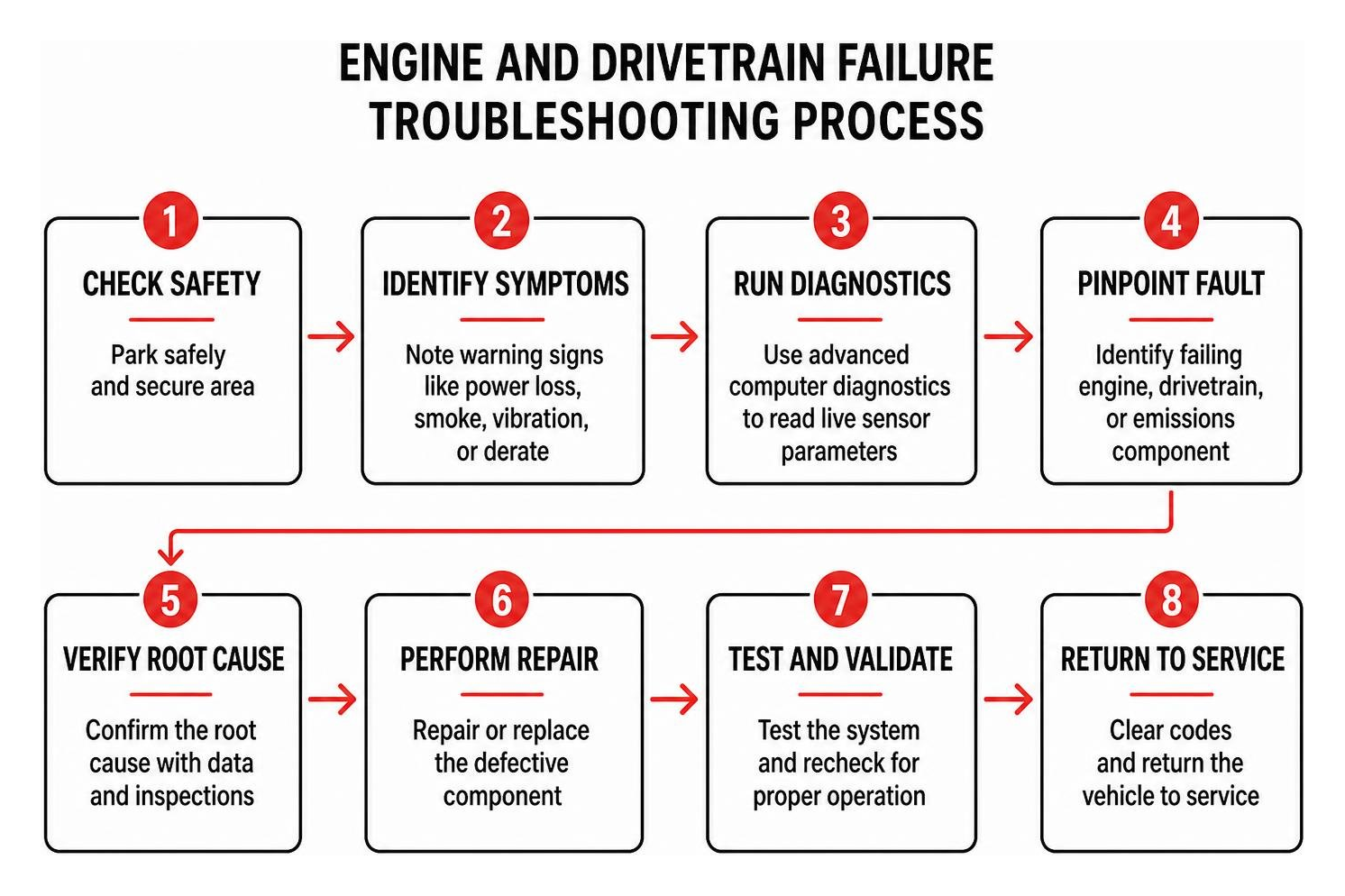
Catching these issues before mechanical failure occurs requires modern advanced truck computer diagnostics to read live sensor parameters and pinpoint failing components accurately.
Navigating Emissions Systems: DPF, EGR, and DEF Diagnostics
Since the implementation of stringent EPA guidelines, modern diesel exhaust aftertreatment systems are among the most frequent causes of sudden roadside derates. A failure in any aftertreatment sub-system will cause the engine control module (ECM) to restrict speed down to 5 mph to protect emissions compliance.
The most common emissions trouble spots include:
- Diesel Particulate Filter (DPF) Clogging: Soot and ash accumulation restrict exhaust backpressure, causing face-plugging and thermal runaway during failed passive regeneration cycles.
- Exhaust Gas Recirculation (EGR) Malfunctions: Carbon-encrusted EGR valves stick open or closed, while cracked EGR coolers cause internal coolant consumption and white exhaust smoke.
- Selective Catalytic Reduction (SCR) & DEF Systems: Crystallized Diesel Exhaust Fluid (DEF), failing dosing valves, and fouled quality sensors prevent proper chemical conversion of harmful NOx gases.
- NOx Sensor Drift: Upstream and downstream NOx sensors face harsh heat and soot, causing erratic voltage signals that confuse the ECM.
When automatic highway regens fail due to short duty cycles or low exhaust temperatures, fleets rely on professional forced regen services to clear soot loads and clear active ECM codes on-site.
Commercial Braking Systems: Air Brakes vs. Hydraulic Brakes
Braking reliability is the single most vital safety element of commercial transportation. Medium-duty delivery trucks commonly use hydraulic braking setups, but heavy-duty Class 8 tractors and commercial trailers utilize heavy pneumatic air brake circuits designed to safely bring 80,000-pound loads to a controlled stop.
Understanding the operational differences between these systems helps maintenance managers diagnose faults quickly and schedule repairs before an inspection failure occurs.
| Operating Parameter | Heavy-Duty Air Brake Systems (Class 8) | Medium-Duty Hydraulic Brake Systems |
|---|---|---|
| Operating Pressure | 100 to 130 psi (Pneumatic) | 1,000 to 2,000+ psi (Hydraulic Fluid) |
| Stopping Mechanism | Air-actuated S-cam drum brakes or air disc calipers | Hydraulic master cylinder and caliper pistons |
| Safety Fail-Safe | Spring-loaded parking chambers engage automatically if air pressure drops | Dual-split hydraulic circuits; no automatic mechanical spring-lock |
| Maintenance Complexity | High (requires regular air dryer cartridge changes, drain valve purging, slack adjuster stroke checks) | Moderate (requires brake fluid flushes, master cylinder checks, line bleeding) |
| Common Failure Modes | Gladhand seal leaks, air governor failure, seized foundation S-cams, out-of-adjustment slack adjusters | Fluid contamination, boiling fluid, blown flexible lines, master cylinder internal bypass |
Commercial brake system health is closely monitored by enforcement authorities under federal safety regulations, such as Part 393 Subpart C brake requirements, making routine maintenance essential.
Critical Air Brake Components and DOT Inspection Red Flags
Brake-related defects are the leading safety citation on North American highways, accounting for roughly 30% of all DOT out-of-service violations annually. An out-of-service order parks the vehicle instantly, requiring immediate roadside intervention before the truck can turn a wheel.
Inspectors focus heavily on several key components:
- Pushrod Travel and Slack Adjusters: Automatic slack adjusters that fail to keep pushrod stroke within prescribed legal tolerances (often exceeding 2 inches on standard Type 30 chambers) are cited immediately.
- Friction Material Thickness: Brake shoe lining worn below 1/4-inch, or cracked, oil-soaked friction pads contaminated by leaking wheel seals.
- Pneumatic Leakage Rates: Audible air leaks at tractor-to-trailer gladhands, cracked air tanks, leaking relay valves, or split rubber lines.
- Low Air Warning Devices: Inoperative visual dash warnings or audible buzzers when primary/secondary reservoir pressure drops below 60 psi.
- Air Compressor and Governor Cycling: Excessive build-up time from 85 to 100 psi, indicating worn compressor piston rings or failing governor valves.
Scheduling routine DOT inspections keeps your tractors and trailers fully compliant and eliminates costly scale-house surprises.
Essential Trailer Maintenance and In-House Structural Fabrication

A tractor is only as productive as the trailer hooked behind it. Commercial trailers—including dry vans, flatbeds, and refrigerated units (reefers)—absorb relentless punishment from road vibration, heavy loading docks, and severe weather conditions.
Neglecting trailer integrity exposes fleets to serious mechanical breakdowns and structural failures out on the highway. Structural repairs often demand heavy-duty mobile fabrication and metalworking capabilities. When landing gear brackets buckle under a heavy load or flatbed rub rails and crossmembers crack under dynamic load stresses, mobile welding and fabrication capabilities resolve these failures on-site without requiring multi-day shop backlogs.
Beyond structural metalwork, dedicated trailer repair includes servicing:
- Reefer Auxiliary Engines: Servicing small-displacement diesel engines, alternators, drive belts, and microprocessor temperature controllers to prevent spoilage of temperature-controlled freight.
- Upper Coupler and Kingpin Assemblies: Inspecting kingpins for severe wear, scoring, and cracking to prevent dangerous uncoupling incidents.
- Tires and Wheel Ends: Rapidly deploying emergency mobile truck tire repair to address blowouts, tread delamination, dry rot, and loose wheel lugs before hub damage occurs.
Trailer Repairs Essential for DOT Compliance
Trailer-related defects account for over 20% of all roadside inspection violations across North America. Federal motor carrier safety inspectors place heavy scrutiny on secondary commercial equipment during level-one checks.
Common violations include:
- Lighting and Electrical Circuits: Inoperative marker lamps, tail lights, directional signals, or broken 7-way harness receptacles.
- Trailer ABS Indicators: Inoperative exterior yellow ABS malfunction warning lamps (required on all trailers manufactured after March 1998).
- Suspension and Running Gear: Cracked leaf springs, split air helper springs, shifted tandem slider pins, or failing shock absorbers.
- Door Fasteners and Latches: Damaged swing-door hinges, broken rear roll-up door cables, or faulty cargo securement hardware on dry vans.
- Wheel End Integrity: Leaking oil bath hubcaps, blown hub gaskets, and noisy trailer axle bearings that cause catastrophic spindle failure if run dry.
Coordinating Complex Diesel Truck and Trailer Repairs
Modern fleet operations require coordinated mechanical support that addresses both the tractor and the trailer simultaneously. Because engine faults, brake issues, and trailer defects frequently happen in tandem, having a mobile response unit equipped to handle both powertrains and chassis components is essential. Our technicians carry the diagnostic software, pneumatic tooling, and heavy parts inventory needed to manage these combined repairs efficiently.
Streamlining Fleet Operations: The Power of Single-Source Repair and Fleet Accounts
Managing modern logistics requires strict budget control and minimal downtime. One of the largest operational inefficiencies for commercial carriers is the fragmented approach of using multiple separate vendors for roadside assistance, towing, mechanical engine diagnostics, and trailer repairs.
Managing multiple vendors creates communication bottlenecks, administrative delays, and conflicting diagnostic assessments. Proactive maintenance managers minimize this overhead by establishing structured fleet preventative maintenance programs that keep power units and trailing equipment on consistent inspection schedules.
Reducing Costly Downtime Through Integrated Recovery and Diesel Truck and Trailer Repair
Fleets that consolidate breakdown recovery and mechanical service under a single provider achieve a 15% to 25% reduction in total downtime per roadside incident.
When you eliminate the need to coordinate an initial tow truck, arrange secondary transport, and wait in an unfamiliar shop’s service queue, your equipment returns to revenue service hours faster. With direct 24/7 mobile truck repair, technicians arrive on-scene with the exact diagnostic tools, air brake hardware, and replacement components needed to resolve the fault right at the roadside or customer yard.
Fleet Account Advantages: Priority Scheduling and Net-30 Terms
Operating a reliable commercial fleet requires predictable maintenance costs and rapid service turnaround. Establishing dedicated fleet commercial credit accounts gives fleet operators clear financial and operational advantages:
- Net-30 Billing Terms: Simplifies cash flow management by consolidating all mobile calls, preventative maintenance, and emergency repairs into clear monthly invoices.
- Priority Dispatch Scheduling: Fleet account holders receive front-of-the-line status for 24/7 emergency calls, helping your drivers get on-scene support quickly.
- Dedicated Service Records: Comprehensive tracking of all repairs, DOT inspection forms, and component wear trends across your vehicle fleet.
- Direct Dispatch Communication: Seamless driver-to-technician-to-fleet manager communication loops that eliminate unapproved repair authorizations.
Frequently Asked Questions About Commercial Truck and Trailer Services
How can a single recovery and repair vendor reduce fleet downtime?
Using a single integrated repair partner eliminates the costly delay of coordinating separate tow companies and third-party repair bays. A single team handles initial dispatch, on-site troubleshooting, and mechanical repairs under one continuous workflow. This saves administrative time, cuts redundant diagnostic fees, eliminates unnecessary secondary towing bills, and gets equipment moving 15% to 25% faster.
What are the most common causes of DOT out-of-service violations during brake inspections?
The most frequent brake-related out-of-service violations include pushrods exceeding maximum stroke limits due to faulty slack adjusters, audible air leaks at hose couplings or gladhands, brake friction lining worn below 1/4-inch, oil contamination from wheel seal failures, cracked brake drums or rotors, and inoperative trailer ABS dash/chassis warning lamps.
What are the signs that a diesel emissions system requires forced regeneration or shop service?
Key warning indicators include illuminated DPF soot level dash lights, the engine derating into limited-horsepower limp mode, frequent failed automatic regeneration cycles, excessive exhaust backpressure warnings, soot staining around the exhaust tips, and higher-than-normal diesel exhaust fluid (DEF) consumption. If your dash indicates that the DPF is full or face-plugged, a mobile forced regeneration is required before the filter plugs completely.
Conclusion
Maximizing vehicle uptime and protecting your fleet’s safety scores requires proactive maintenance, rapid diagnostic capability, and dependable mobile repair support. Whether dealing with complex common-rail diesel injection failures, stubborn emissions derates, cracked structural trailer members, or roadside brake leaks, having skilled ASE-certified technicians available 24/7 protects your business from costly downtime.
Keep your trucks rolling, protect your delivery timelines, and partner with a team dedicated to keeping your drivers safe on the open road.
Reach out directly to Rapid Truck Repair today to establish your commercial fleet account, schedule on-site preventative maintenance, or request immediate 24/7 mobile assistance across the West Coast corridor.
— Sagar Bhardwaj, Lead Diesel Specialist & Fleet Maintenance Consultant